The Phoenix sun lends a relentless clarity to a room that often feels oppressively small and functionless. In the valley heat, the bathroom is more than a private spa or a morning routine hub; it’s a sanctuary that cops the rhythm of daily life. I’ve spent years watching homes here evolve from cramped, dated spaces into bright, efficient showers and baths that invite you to linger a little longer. The difference isn’t merely cosmetic. It’s practical, emotional, and sometimes a little stubborn—success arrives when you balance what you want with what a home can realistically deliver.
In this city, remodeling bathrooms is a shared ritual between owner and contractor, a collaboration that begins with listening. The client walks in with a vision sketched in pencil and a budget pinned to a calendar. The challenge is translating those intangible desires into a tangible, livable space that endures the test of Phoenix weather, daily use, and shifting tastes. The payoff is immediate: a bathroom that not only looks good but also feels right. It should be easy to clean, robot-proof for the busy mornings, and kind to the wallet over the life of the home.
From a practical standpoint, the Phoenix landscape imposes some clear constraints. Water conservation is not a trend here; it’s a necessity. The climate dictates materials that resist heat, stand up to humidity, and survive the occasional monsoon without turning the space into a swampy memory. At the same time, this is a city where people live outside for seven or eight months a year. The bathroom, in many homes, is the part of the house most likely to benefit from a touch of outdoor-influence—a skylight that bathes the room in soft morning light, a window that opens to vent humidity, or a glass wall that turns a small bath into an airy retreat without sacrificing privacy.
What follows is a mosaic of real-world decisions, trade-offs, and small wins I’ve seen again and again in Phoenix homes. The article meanders through design choices, practicalities, and project-management notes that come from years of hands-on remodeling. It’s not a glossy brochure; it’s a field report in a city where the weather, the water, and the wandering electrical codes all demand respect.
A living room for the bathroom: design in the heat
When I start a bathroom project in Phoenix, I begin with a simple premise: treat the room as a microclimate. It’s not enough to pick a tile because it looks nice on a showroom floor. The tile has to perform in heat, handle moisture, and look timeless after many summers. I’ve seen too many bathrooms that looked stately for a year and then bore the marks of sun-faded grout and chalky grout lines after a harsh season. The key is to plan for a surface that ages gracefully.
Materials matter, and so do light and airflow. A light floor can make the room feel larger; a darker tone can ground the space when you pair it with lighter walls. A common Phoenix pattern is to use large-format porcelain tiles on the floor and shower walls. They resist cracking from heat cycling and place fewer grout lines in view, which helps with cleaning. The trade-off is that large tiles can be harder to install in a tight space and may require a more exacting substrate. In practice, I’ll opt for a neutral stone or warm gray palette for floors and walls, then inject character with cabinetry, hardware, and textiles.
Natural light changes how you experience a bathroom. A skylight can flood the room with morning sun, making a white tile pop and giving a sense of airiness that reduces the fatigue you feel after a long drive home from the desert. If a skylight isn’t practical due to roof structure or budget, a white, recessed ceiling with good recessed lighting can do a similar job. I’ve learned to balance daylight with task lighting over vanities and the tub area. You don’t want a space that’s bright in the morning and dim by late afternoon. A well-designed layered lighting plan adds warmth and a sense of ritual to the space.
The shower, in particular, is a focal point. In Phoenix, the modern shower is not a luxury but a practical space that solves two chronic problems: water resistance and daily showering comfort. A curbless or low-threshold shower can transform a cramped corner into a seamless, accessible zone. It also makes a compact bathroom feel bigger because there are fewer visual barriers to your line of sight. The downside is that curbless showers demand precise slope and waterproofing. You need a professional who understands how to install a proper pan with a reliable membrane to prevent leaks. The risk is not just damage; it’s the kind of leak that undermines a future sale and erodes trust between homeowner and contractor.
Vanity and storage are more than stylistic choices. In Phoenix, where humidity can persist in the bedroom and bathroom alike, you want cabinetry that’s mildew resistant and easy to wipe down. Solid wood looks timeless, but it’s more susceptible to humidity swelling unless properly sealed. Engineered wood with a water-resistant core can be a safer bet in many scenarios. Drawer hardware should be chosen for ease of use and durability. Soft-close drawers are a small luxury that matters on a daily basis when mouths are brushing, people are grabbing toothpaste, and towels are tucked away.
Ventilation is critical. The moisture in a bathroom punishes poorly vented spaces. In hotter months, a good exhaust fan that runs for at least 15 minutes after a shower is a good rule of thumb. If there’s a window, pair it with a humidity-sensing exhaust fan for days when you forget to flick the switch. Beyond mechanical solutions, consider air sealing and making sure that the bathroom door doesn’t trap humid air in the hall. A well-ventilated space reduces the chance of mold and keeps paints and seals from deteriorating prematurely.
The Phoenix remodel often uncovers a small, stubborn truth: a bathroom’s longest life cycle is dependent on products that resist the elements. That means choosing modern, water-resistant finishes that still feel warm and human. It’s not a forced choice between style and resilience. It’s about selecting finishes that strike a balance. For countertops, quartz clocks in as a reliable workhorse—really durable, stain resistant, and available in a range of colors that can harmonize with almost any tile. For fixtures, brushed nickel or matte black hardware both read modern and can hide fingerprints with decent regular cleaning. The right mix keeps a bathroom looking clean even after the children have brushed their teeth at eighty different angles.
Two crucial decisions shape the project’s arc: timing and budget. In Phoenix, the weather window often determines how aggressively you plan demolition, roofing, and exterior access for materials. If you can avoid a monsoon-catching week, you’ll save labor time and protect the home from weather delays. As for budget, the best approach is to allocate a little more for the things that define day-to-day life in the space—good water pressure, a reliable shower valve, a solid drain, and a vanity that doesn’t look dated two years from now. It’s the high-usage items and materials that determine whether the remodel feels worth it after the dust settles.
Two lists to guide your thinking
In projects like these, a couple of small lists can keep a project aligned without becoming a drudgery of decisions. First, a quick checklist you can reference during design discussions. Second, a short guide to material priorities that often surfaces as a wish list during concept meetings. These aren’t rules carved in stone, but they serve as practical guardrails.
- What matters most in this bathroom now: water efficiency, storage, lighting quality, and ease of cleaning. What is the ceiling on budget for fixtures and finishes, and what can be adjusted later without redoing the core layout? How will the space be used by different family members, and what accessibility features should be included now rather than later? Are there structural or plumbing limitations that we should not ignore in the early stages? How will the bathroom connect to the rest of the home’s mood and color scheme?
Second, here is a compact look at material priorities that often influence decisions in Phoenix bathrooms:
- Surfaces that resist heat and humidity, such as porcelain and quartz with a sealed finish Durable cabinetry with moisture resistance and minimal maintenance A ventilation strategy that actually clears the air A shower design that minimizes grout lines without compromising cleaning A lighting plan that provides both tasks and ambiance
That framework gives a clear directional push while still allowing space for the unexpected. From a practical standpoint, the Phoenix bathroom refurbishment thrives on two simple truths: the space should be easy to use every day, and the design should stand up to the weather and the wash of daily life.
Solving problems lives between the lines
Every project comes with a handful of surprises. A common one in this city is an aging plumbing stack that looks fine on a drawing but is a little more fragile in reality. We’ve found it prudent to budget a modest contingency for unexpected plumbing work. A good contractor will present a clear plan for how to address these issues without blowing the budget, but it helps to go in with the assumption that not everything will go to plan. The important thing is how quickly you can adapt and how transparent the communication remains.
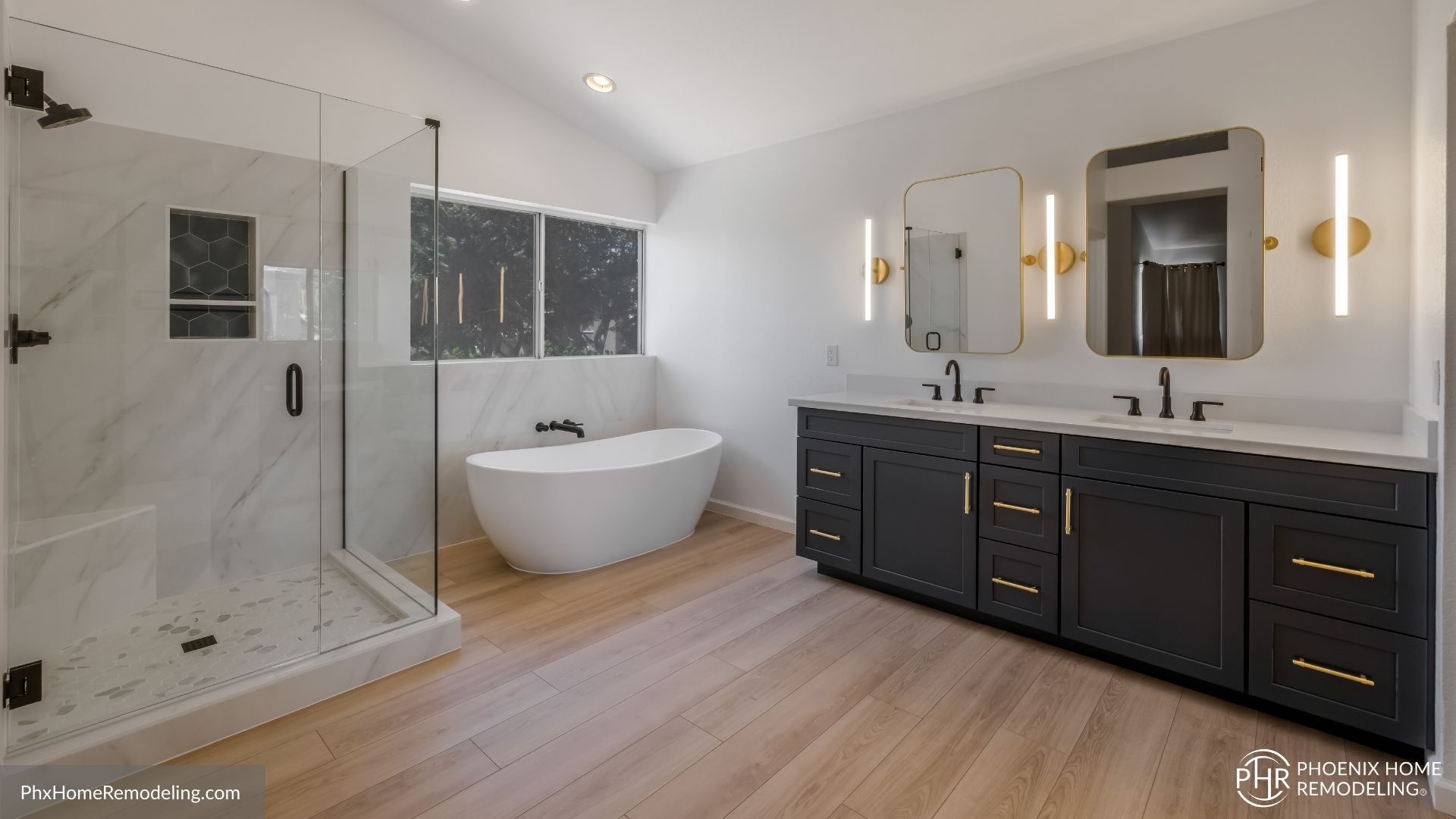
Another frequent ask from Phoenix homeowners is to create a spa-like experience without turning the bathroom into a lavish indulgence that sits unused. If you’re aiming for a calm, spa-inspired vibe, the simplest route is to select fixtures and finishes with a cohesive voice. A narrow glass shower with a simple rain shower head can feel expansive in a small room. A freestanding tub can anchor the space if there’s room for it. It’s not about chasing every trend; it’s about ensuring the space feels intentional and aged well.
One of the more satisfying topics is the way a bathroom renovation can raise the overall energy of a home. In many cases, an updated bathroom makes a home feel three to five years newer, simply because it eliminates the friction points that wear on daily life. It’s a reminder that remodeling is not just about style and resale value. It’s about making a home more livable in the here and now. The demonstration of care translates into fewer frustrations and more evenings that begin and end in a space that feels right.
The Phoenix context is also a reminder to think ahead to maintenance. You want surfaces that require minimal upkeep but still look polished after a year of use. That often means premium finishes instead of budget substitutes. If you’re renovating a rental property in the home remodeling companies city, the calculus shifts toward durability that stands up to tenants and their routines. If the home is a family residence, you’ll want to prioritize safety, accessibility, and easy-to-clean surfaces that withstand the rigors of daily life.
The value of reliable subcontractors cannot be overstated. The right plumber or tile setter will make or break a project. In Phoenix, the best partners aren’t merely skilled; they’re honest about what’s possible in a desert environment. They understand how to seal and drain properly, how to pack in insulation against heat in the wrong places, and how to request the materials that hold up under intense sun. It may sound small, but those details can mean the project wraps up on schedule rather than being dragged out by new discoveries.
Finally, it’s worth noting the social dimension of a Phoenix bathroom remodel. You are not just buying new tile; you’re inviting your family to experience the space in a new way. The bathroom deserves the same care as the kitchen or the living room because it’s a stage for daily rituals. The way you wake up, brush your teeth, and step into a warm shower can set the tone for the day. When you treat the bathroom as an important room rather than a byproduct of the house, the cumulative effect on mood and home life is palpable.
What a completed project feels like in real life
Think of a typical Phoenix bathroom remodel that begins in blank walls and ends in a space that invites you to linger after a long day. The first morning you step into the renovated room, the air smells faintly of fresh grout and new sealant. The floor feels cool on your bare feet after a long session under the desert sun. The light catches the edge of the vanity mirror just so, turning the room into a stage where you perform your daily routine with a quiet sense of satisfaction. The shower door slides smoothly, and the water pressure is balanced across multiple fixtures. You notice how easy it is to wipe down the counters and how the grout lines vanish into the texture of the tile rather than sticking out like lines of chalk.
The attention to small details matters. A towel bar placed just so, a bench in the shower for resting a leg after a long jog, a shelf within reach that keeps shampoos from piling up on the edge of the tub. The overall effect is a room that feels modern without feeling cold, a space that welcomes your presence each morning and offers a moment of calm as you unwind at night.
If you’ve ever lived through a renovation, you know the emotional arc that comes with it. There are days painted in the color of dust, hours spent deciding between two vanity pulls, and the occasional moment when you wonder whether this is all worth the disruption. Then there are nights when you walk through your newly finished bathroom, and the experience of stepping into a bright, clean, efficient space reveals itself in a quiet moment of gratitude. The remodeling process, in a place like Phoenix, is not a sprint. It is a careful, patient journey that culminates in a space you feel good about for a decade or more.
Edge cases and trade-offs that matter in the field
No project is without its tricky cases, and Phoenix adds a couple of unique constraints. If a home lacks a robust ventilation strategy, you have to retrofit the system. If the existing plumbing is older than the homeowners, you must negotiate with the reality that replacing it will cost both time and money. You trade a little of the latest style for proven reliability when budgets are tight. If a client insists on a fixture that looks gorgeous in a showroom but turfs out to be unreliable in real use, you’ve learned that the showroom is a snapshot, not a long-term truth.
There are moments when the design asks for something that cannot happen on the timeline or budget. In those cases, I try to present the alternatives clearly. A solution that looks almost the same but costs less can be a good compromise, as long as it doesn’t sacrifice essential functions. It’s about honesty. It’s about balancing desires with practical constraints and then communicating those trade-offs with respect and clarity. Clients appreciate this approach because it cancels the guesswork and lays out a clear path forward.
The Phoenix magic, distilled
What makes a successful bathroom remodel in Phoenix is not the brightest tile or the most expensive shower head; it’s the clarity with which you approach the problem. You want the space to feel calm, to function well, and to resist the desert climate. You want to protect the investment by using materials that last and by planning for maintenance. You want to design around how you live now, while allowing for how you might live in five or ten years. It’s a forward-looking, practical art.
In the end, a bathroom remodel in Phoenix should be felt more than it is seen. The transformation shows up in daily routines: a quick morning rinse that’s refreshing rather than rushed, a start-of-day ritual that unfolds without a hitch, a bedtime soak that feels luxurious but not extravagant. You’ll notice the little things—the ease of cleaning grout lines, the simplicity of the door hardware, the gentle glow of a night light along the vanity. These are the details that carry a lot of weight when you live in a place where the weather is relentless and the days are long.
A few closing reflections from the field
If you’re contemplating a bathroom remodel in Phoenix, here are a few guiding thoughts that come from years of watching rooms become more usable and more beautiful.
First, design with daily life in mind. The most enduring bathrooms are the ones that feel the most honest to use. If you can’t open the cabinet door without knocking something off the shelf, rethink the layout. If the shower has too many fixed curves, you’ll spend years battling the water on the floor. The simplest changes often yield the most patience-restoring returns.
Second, choose materials that age gracefully under Phoenix conditions. It’s easy to be drawn to the most striking finishes, but the key to longevity is less about flash and more about resilience. A good balance of texture, color, and durability will keep a bathroom feeling current even after the next trend arrives.
Third, embrace the ceremony of maintenance. A five-minute weekly wipe-down, a quick check for leaks, and a plan for seasonal resealing can keep surfaces looking new for years. In environments as demanding as the desert, a little ongoing care buys a lot of future relief.
And finally, trust the process. Remodeling, especially in a city with as many variables as Phoenix, is a journey. There will be decisions that feel heavy, and there will be moments of exhilaration when a space finally comes to life. The payoff is not just a prettier bathroom; it’s a more organized, comfortable, and efficient home that supports your everyday life with a touch of warmth and light.
If you’re reading this and planning a project, know that you’re forming a bond with a place that rewards careful work and patient planning. A bathroom may be a small room in the architecture of a house, but in the life of a home, it’s a space where so much of daily joy begins. In Phoenix, the transformation of a bathroom is a story of resilience, craft, and the quiet delight of returning to a room that finally feels like it was built for you.